Staking in the Dark: Why Your Ethereum or Solana Node May Have Gone Silent Without You Knowing
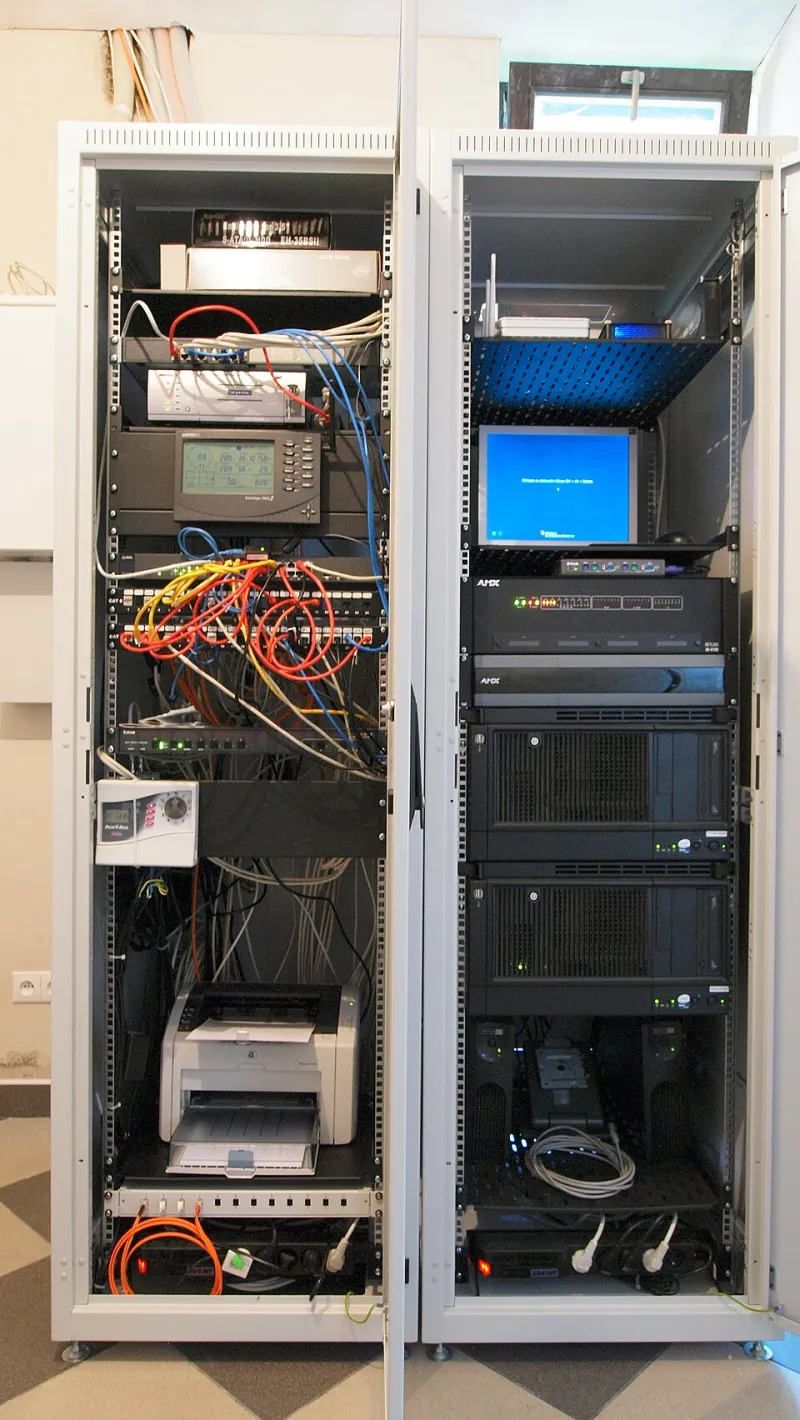
Photo: Jan Prucha, CC BY-SA 3.0, via Wikimedia Commons
There is a particular cruelty to a validator that appears operational but has, in practice, ceased to function. The hardware is on. The software is running. The dashboard, if one exists at all, may even report a green status indicator. And yet the node has not attested to a single block in weeks — and the network has been levying inactivity penalties ever since.
This is not a rare edge case. Across both Ethereum and Solana, a meaningful subset of solo stakers are running what practitioners have begun calling phantom validators: nodes that consume power and occupy a slot in the active set while contributing nothing to consensus. The financial consequences range from mildly frustrating to genuinely significant, depending on how long the failure goes undetected.
The Anatomy of a Silent Failure
Validator downtime is not always dramatic. The scenarios most commonly discussed — a power outage, a corrupted client installation, a slashing event — tend to announce themselves. The failures that quietly persist for months are typically subtler.
On Ethereum, the most common culprit is a desynchronization between the execution client and the consensus client. Validators require both layers to function, and a stalled execution client — perhaps due to a missed software update, a full disk, or a misconfigured peer connection — can leave the consensus client running normally in isolation, producing no attestations and no block proposals. The operator sees a live process and assumes participation. The beacon chain records a different story.
On Solana, the architecture differs but the failure mode is analogous. Vote transactions, which validators must submit continuously to register participation, can silently fail if the node falls behind the cluster's turbine propagation or if RPC connectivity degrades. A validator that stops submitting votes is not slashed outright, but it begins missing rewards immediately — and if the condition persists, it can be delinquent-flagged and eventually removed from the active stake pool rotation.
In both ecosystems, the defining characteristic of these failures is their invisibility to operators who are not actively looking for them.
Why Home Stakers Are Disproportionately Exposed
Institutional validators and professional node operators typically run automated alerting infrastructure: uptime monitoring services, custom scripts that query the beacon API or Solana RPC at regular intervals, and redundant notification channels that escalate to on-call personnel. A failure that persists for more than a few minutes triggers a human response.
Solo stakers — the individuals running a single Ethereum validator on a home server or a Solana node on consumer hardware — rarely have this infrastructure in place. Many rely on a browser-based dashboard they check occasionally, or on a Telegram bot they set up during initial configuration and never tested for edge cases. Some rely on nothing at all beyond the assumption that no news is good news.
The assumption is reasonable in normal conditions. It becomes dangerous when a failure mode exists that does not surface through the channels the operator is actually watching.
A documented pattern among US-based home stakers involves missed operating system updates that eventually cause disk I/O bottlenecks. The node continues to run, memory usage appears normal, and the process does not crash — but attestation latency climbs until the client is effectively offline from the network's perspective. Operators who check CPU and memory metrics, but not attestation effectiveness or vote credits, will see nothing alarming for weeks.
Measuring What You Are Actually Contributing
The first step in diagnosing a phantom validator is shifting the monitoring focus from system health to network participation. These are related but distinct metrics, and conflating them is the root cause of most prolonged silent failures.
For Ethereum solo stakers, the most reliable signal is attestation effectiveness — specifically, the inclusion distance of submitted attestations and the percentage of expected attestations that were actually included on-chain. Tools such as beaconcha.in provide a public-facing validator dashboard that surfaces this data without requiring any local configuration. Operators who have not bookmarked their validator index on this platform should do so immediately. A validator with an attestation effectiveness below 95 percent warrants investigation; one that has not attested in 24 hours is almost certainly offline.
The Ethereum client Lighthouse exposes a local API endpoint that returns detailed validator status, including the last attested epoch. Prysm and Teku offer comparable endpoints. Operators comfortable with basic scripting can build a simple cron job that queries this endpoint and sends an alert — via email, SMS, or a messaging platform — if the last attested epoch exceeds a configurable threshold.
For Solana, the equivalent metric is vote credits accumulated per epoch. The Solana CLI command solana validators returns a snapshot of all active validators, including vote credit totals and delinquency status. A validator with a delinquency flag or vote credits significantly below the cluster average is not functioning correctly. Third-party services such as Stakewiz and Validators.app provide continuous monitoring and will surface delinquency events in near real time, often before the operator would otherwise notice.
Case Studies in Delayed Discovery
The consequences of late detection are not abstract. Among the community accounts that have circulated in US-based Ethereum staking forums and Discord servers, several patterns recur.
One operator in the Pacific Northwest ran an Ethereum validator on a repurposed desktop for approximately eight months before discovering that a failed SSD had caused the execution client to stall. The consensus client continued running, the system remained online, and nothing in the operator's monitoring workflow — which consisted of checking the machine's uptime via a home network tool — indicated a problem. The validator had been offline for eleven weeks by the time the operator checked beaconcha.in in response to an unrelated question in a community forum. The accumulated inactivity penalties represented a loss equivalent to several weeks of expected rewards.
A Solana home validator operator in Texas discovered a more insidious variant: a misconfigured firewall rule, introduced during a routine router replacement, had blocked the UDP ports required for turbine block propagation. The node appeared healthy from the inside — it was synced, the process was running, and local RPC queries returned valid responses. But it had been unable to receive blocks from the cluster for six weeks, rendering it effectively invisible to the network during that period.
In both cases, the operators had no alerting in place that would have surfaced the failure. Discovery was accidental.
Building a Monitoring Stack That Actually Works
The practical minimum for a solo staker who wants genuine visibility into validator health is a combination of on-chain metric monitoring and system-level alerting that covers both layers independently.
For Ethereum, this means configuring alerts on beaconcha.in for the specific validator index — the platform supports email notifications for missed attestations and is free to use. Locally, operators should expose and query the client API at regular intervals, using a lightweight script or a tool such as eth-duties, which is purpose-built for tracking validator duty performance. Grafana dashboards, while requiring more setup effort, provide the most comprehensive view and are well-documented in the Ethereum community.
For Solana, Stakewiz offers a free monitoring tier that covers delinquency alerts and vote credit tracking. Operators running their own RPC infrastructure should additionally monitor gossip participation and turbine port accessibility from an external vantage point — a detail that the Texas case above illustrates with particular clarity.
The broader principle is that a validator's presence on a network and its active contribution to that network are two separate conditions. Monitoring systems that conflate them will consistently fail to detect the failures that matter most.
The Cost of Complacency
Solo staking was designed to strengthen network decentralization — to distribute consensus participation beyond institutional validators and large staking pools. That goal depends on home operators running nodes that are genuinely online, genuinely attesting, and genuinely contributing to block production.
Phantom validators undermine that purpose while quietly extracting a financial penalty from the operators who run them. The good news is that the diagnostic tools exist, they are largely free, and the monitoring infrastructure required to catch these failures early is well within reach of anyone technically capable of running a node in the first place.
The harder question is whether solo stakers are willing to treat monitoring as a non-negotiable part of the job — not an optional add-on, but a prerequisite for participation that actually counts.