Owning the Token, Losing the Asset: The Off-Chain Dependencies That Quietly Hollow Out Digital Ownership
Photo: JonathanKingD, CC BY-SA 4.0, via Wikimedia Commons
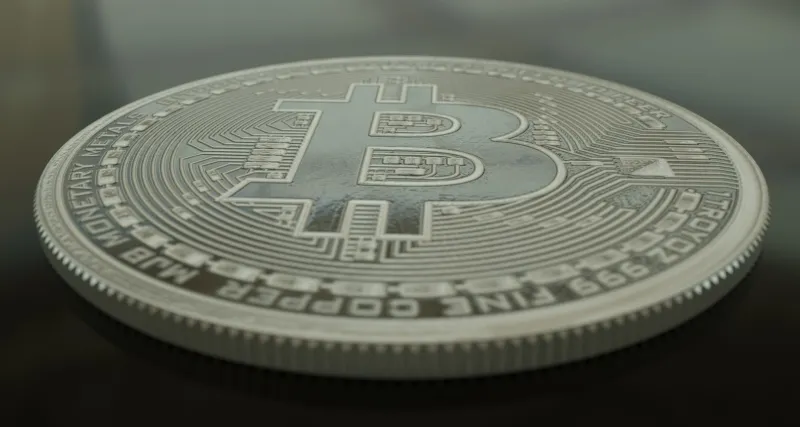
When an investor purchases an NFT or acquires a token linked to a real-world asset, the blockchain entry feels like a deed — permanent, tamper-resistant, and beyond the reach of any third party. That intuition is partially correct. The ledger entry itself is durable. What it points to, however, frequently is not.
The distinction matters enormously, and it is one that the broader market has been slow to internalize. For American retail investors who have spent years hearing that blockchain technology eliminates counterparty risk and third-party dependency, the reality of off-chain metadata architecture represents a significant and largely unacknowledged vulnerability.
What the Blockchain Actually Records
Most NFTs, including the overwhelming majority issued on Ethereum and Solana, do not store the underlying image, document, or data directly on-chain. The cost of doing so would be prohibitive. Instead, the token contains a pointer — typically a URL or a content-addressed hash — that directs a wallet or marketplace to retrieve the associated file from an external source.
In practice, that external source is one of three things: a centralized server controlled by the issuing project, the InterPlanetary File System (IPFS), or a newer decentralized storage network such as Arweave. Each of these carries a different risk profile, and none of them is as permanent as the blockchain entry that references them.
When the pointer leads to a project-controlled server and that project shuts down, the asset it described is effectively gone. The token remains on-chain. The wallet still shows ownership. But the image, the metadata, the contractual terms — whatever gave the token its meaning — have vanished. Collectors are left holding a cryptographic receipt for something that no longer exists.
The IPFS Pinning Problem
IPFS is often presented as the responsible middle ground between fully centralized hosting and the expense of on-chain storage. Files on IPFS are addressed by their content hash rather than a server location, which means the file itself cannot be altered without changing its address. This property is genuinely useful.
The problem lies in persistence. IPFS does not guarantee that any given file will remain available. Nodes on the network only store files they have chosen to pin. If no node is actively pinning a particular file, it will eventually be garbage-collected and disappear from the network entirely. The content hash in the token will remain valid — it will simply resolve to nothing.
Pinning services exist precisely to address this gap, but they introduce their own dependencies. When a project pays a pinning service to keep its metadata available, that availability is contingent on the project continuing to pay, the pinning service remaining solvent, and the service honoring its commitments. Several prominent NFT projects have already cycled through pinning providers or allowed subscriptions to lapse, with predictable results.
Researchers examining legacy NFT collections have documented cases where a significant percentage of assets within a single collection return broken metadata — not because the tokens were compromised, but because the infrastructure sustaining them was quietly abandoned.
Centralized Data Layers in Supposedly Decentralized Protocols
The metadata problem extends well beyond the NFT market. A range of tokenized real-world asset protocols, decentralized identity systems, and on-chain credential frameworks rely on off-chain data registries to function. The token grants access or represents ownership; the off-chain layer defines what that access or ownership actually means.
In several documented cases, protocol upgrades or business pivots have resulted in the deprecation of legacy data endpoints without adequate migration paths for existing token holders. Investors who purchased tokens under one data architecture found their holdings interpreted differently — or not at all — by wallets and marketplaces after the underlying schema changed.
This is not hypothetical. Multiple projects operating in the real-world asset tokenization space have restructured their metadata standards, leaving early adopters with tokens that display incorrectly or fail to surface in standard portfolio trackers. The on-chain ownership record is intact. The practical utility of that ownership is diminished or eliminated.
Auditing True Ownership: A Practical Framework
For investors who want to assess the genuine durability of their digital holdings, a metadata audit is not optional — it is essential due diligence. The following framework applies to NFTs, tokenized assets, and any token whose value depends on off-chain data.
Resolve the metadata URI directly. Most blockchain explorers allow users to inspect the raw token data, including the metadata URI. Follow that link manually. If it returns a live response, note whether it points to IPFS, Arweave, a centralized domain, or an API endpoint. Each requires a different risk assessment.
Check IPFS pin status. For IPFS-hosted assets, tools such as ipfs.io gateway checks and third-party pin status verifiers can indicate whether a file is actively pinned by known nodes. A file that resolves today may not resolve in six months if pinning arrangements lapse.
Examine the issuing project's infrastructure commitments. Has the project published documentation on how it intends to maintain metadata availability over time? Has it migrated to Arweave or a comparable permanent storage solution? Projects that have made no public commitment to long-term data persistence represent elevated risk.
Assess contract upgradeability. If the smart contract governing the token is upgradeable — a common design choice that allows developers to fix bugs — the metadata URI itself could potentially be altered by the contract owner. An immutable contract with mutable off-chain data is one risk profile. An upgradeable contract with mutable off-chain data is a compounded one.
Cross-reference marketplace display with raw data. Marketplaces cache metadata aggressively. An asset that displays correctly on OpenSea or Magic Eden may be drawing from a stale cache rather than a live source. Confirm that the underlying URI still resolves independently of marketplace presentation.
What Durable Ownership Actually Requires
The gold standard for digital asset permanence is on-chain storage of all relevant data, or storage on a network — such as Arweave — that provides cryptographic guarantees of perpetual availability funded at the time of upload. Both approaches exist and are used by a subset of projects that prioritize long-term integrity over short-term cost savings.
For most of the market, however, those standards have not been adopted. The result is a landscape in which blockchain ownership records are durable but the assets they represent exist on a spectrum of fragility that most investors have never been asked to evaluate.
As the tokenized asset market matures and institutional capital continues to enter the space, the gap between recorded ownership and functional ownership is likely to become a more prominent source of dispute — and, potentially, litigation. American investors accustomed to the legal protections surrounding traditional securities will find that the remedies available when off-chain data disappears are far less defined.
The blockchain entry will still be there. Whether it means anything is a question that the chain alone cannot answer.