Compliance or Consequence: How Imminent Stablecoin Legislation Could Redirect Tens of Billions Across Digital Asset Markets
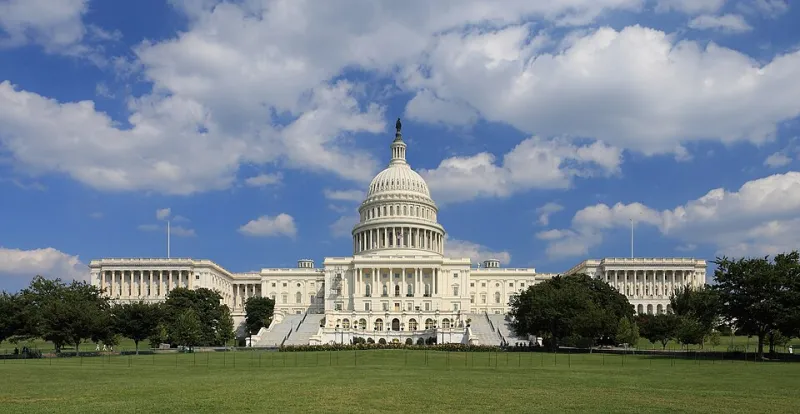
Photo: Martin Falbisoner, CC BY-SA 3.0, via Wikimedia Commons
For most of the past three years, stablecoins have occupied an awkward position in the American financial landscape — indispensable to crypto markets yet perpetually suspended in regulatory limbo. That limbo may be ending. With multiple competing frameworks advancing through Congress and the Federal Reserve weighing in on reserve standards, digital asset managers are increasingly treating stablecoin legislation not as a distant hypothetical but as an active portfolio variable.
The numbers at stake are significant. The aggregate stablecoin market currently exceeds $160 billion in circulating supply, with USDT, USDC, and a handful of competitors accounting for the overwhelming majority of volume. A credible federal framework — one that mandates reserve composition, audit frequency, and issuer licensing — would not simply validate existing players. It would almost certainly trigger a material reallocation away from issuers that cannot meet the new standards and toward those positioned to thrive under compliance-driven conditions.
The Legislative Landscape in Plain Terms
Two primary frameworks have dominated Congressional discussion. The first, broadly associated with the Senate Banking Committee, emphasizes bank-like oversight for stablecoin issuers, requiring full reserve backing in cash or short-duration Treasuries and subjecting larger issuers to Federal Reserve supervision. The second approach, which has found traction in the House, favors a dual federal-state licensing model that would allow non-bank entities to issue stablecoins under state-level oversight, provided they meet minimum reserve and redemption standards.
The distinction matters enormously for market structure. A bank-centric framework would effectively disadvantage offshore issuers — most notably Tether — while elevating Circle's USDC, which already operates with a compliance-forward posture and maintains reserves primarily in U.S. Treasuries and cash equivalents. A dual-track model might preserve more competitive diversity but would still require meaningful operational changes across the industry.
"The market has been pricing in ambiguity for so long that any credible resolution — even an imperfect one — is likely to trigger repositioning," said one New York-based digital asset fund manager who requested anonymity pending client communications. "We've been reducing exposure to issuers with opaque reserve structures since early this year."
Who Stands to Gain — and Who Faces Headwinds
Circle, the Boston-based company behind USDC, has positioned itself as the compliance-ready stablecoin issuer almost by design. Its monthly attestations, Treasury-heavy reserve composition, and active engagement with Congressional staff have made it the default beneficiary in most regulatory scenario analyses. If legislation passes in a form resembling either major framework, USDC supply — which contracted sharply in 2023 following the Silicon Valley Bank episode — could recover substantially as institutional allocators gain confidence in its regulatory standing.
PayPal's PYUSD, while still a minor player in terms of market share, represents a different kind of beneficiary: an issuer with deep compliance infrastructure, a recognizable consumer brand, and existing relationships with financial regulators. Several analysts have noted that a licensing regime favoring established financial entities could accelerate PYUSD's growth in ways that organic adoption alone has not.
Tether presents the most complex calculus. Despite commanding roughly 70 percent of stablecoin market share globally, its offshore domicile and historically limited transparency make it a difficult fit for any U.S.-focused regulatory framework. Tether has made gestures toward greater disclosure in recent quarters, but whether those gestures satisfy Congressional expectations remains genuinely uncertain. A compliance-driven rotation away from USDT — even a partial one — would represent tens of billions in movement across exchange order books, lending protocols, and cross-border payment rails.
The $50 Billion Estimate: Where It Comes From
The $50 billion portfolio rotation figure circulating among institutional desks is not a single analyst's projection — it reflects a range of scenario models that share a common assumption: that a meaningful percentage of the roughly $110 billion currently held in stablecoins with ambiguous or non-U.S.-compliant reserve structures would shift toward regulated alternatives within 12 to 24 months of legislation taking effect.
That assumption is not unreasonable. Institutional allocators — pension funds, family offices, and corporate treasurers experimenting with digital assets — are already subject to fiduciary standards that make non-compliant stablecoin exposure legally uncomfortable. Regulatory clarity would not merely permit reallocation; for many institutional participants, it would effectively mandate it.
"You have a significant pool of capital sitting on the sidelines specifically because stablecoin compliance risk is unquantifiable right now," explained a regulatory attorney specializing in fintech at a Washington, D.C. firm. "Once there is a defined legal standard, that capital doesn't stay on the sidelines. It moves, and it moves quickly."
How Investors Should Think About Positioning
For retail and institutional investors alike, the prudent approach involves evaluating stablecoin exposure across several dimensions that will likely align with any eventual regulatory framework.
Reserve transparency remains the most fundamental criterion. Stablecoins backed by independently audited, short-duration U.S. government securities and cash face the lowest compliance risk under virtually any proposed framework. Those relying on commercial paper, foreign sovereign debt, or opaque asset mixes face substantially more uncertainty.
Issuer domicile and licensing posture will matter at least as much as reserve composition. Entities that have proactively engaged with U.S. regulators, sought state money transmitter licenses, or filed public comment letters on pending legislation are demonstrably better positioned than those operating primarily outside U.S. jurisdiction.
Integration depth within DeFi and CeFi infrastructure is a double-edged variable. Stablecoins deeply embedded in lending protocols and decentralized exchanges benefit from network effects, but that same embeddedness can amplify volatility during a compliance-driven rotation if liquidity providers simultaneously seek exits.
Finally, investors should resist the assumption that regulatory clarity will arrive on a predictable schedule. Legislative timelines in Washington are notoriously elastic, and a framework that appears imminent can stall for months over jurisdictional disputes between federal agencies. The appropriate posture is not to time a trade around a bill's passage but to ensure that existing stablecoin holdings are defensible under a range of regulatory outcomes.
The Broader Market Implication
Beyond the stablecoin market itself, the passage of a credible U.S. framework would carry symbolic weight for the broader digital asset industry. It would represent the first major piece of crypto-specific federal legislation in American history — a signal to institutional allocators globally that U.S. digital asset markets are maturing toward a compliance infrastructure comparable to traditional finance.
That signal alone could accelerate capital formation in adjacent markets, from tokenized Treasuries to regulated crypto lending. The stablecoin question, in other words, is not merely about which dollar-pegged token dominates exchange volume. It is about whether the United States establishes itself as the jurisdictional anchor for the next generation of digital finance — or cedes that role to more permissive regulatory environments abroad.
The legislation is coming. The only remaining questions are its precise form and its timing. For investors, waiting for certainty before adjusting exposure is a strategy with its own set of risks.