Scattered and Forgotten: The Forensic Portfolio Audit Every Crypto Investor Needs to Run Right Now

Photo by Photo by Shubham Dhage on Unsplash on Unsplash
Most American crypto investors can name their primary exchange account and their main hardware wallet. What they cannot name — with any precision — is everything else. The test wallet spun up during a DeFi experiment in 2021. The Coinbase account opened under an old email address before a job change. The MetaMask instance tied to a browser that no longer exists on a laptop that has since been replaced. The airdrop wallet that received tokens from three separate protocols and was never revisited.
This fragmentation is not a niche problem affecting careless investors. It is a structural feature of how the crypto ecosystem evolved — rapidly, across incompatible chains, through a succession of hype cycles that encouraged opening new wallets faster than anyone thought to catalog them. The consequence is that a meaningful portion of American retail investors are carrying measurable unreported value, unresolved tax exposure, and genuine recovery risk across addresses they have partially or entirely forgotten.
Running a forensic self-audit is not glamorous work. It is, however, one of the highest-value financial housekeeping tasks available to any investor who has been active in this space for more than two or three years.
Why Fragmentation Happens — and Why It Compounds
The architecture of crypto encourages proliferation. Each new blockchain typically requires its own wallet infrastructure. Layer-2 networks on Ethereum prompted millions of users to bridge assets into fresh addresses. Solana, Avalanche, and Cosmos ecosystems each have their own wallet conventions. NFT minting seasons pushed collectors to isolate activity across multiple MetaMask profiles to manage gas costs or maintain pseudonymity.
Exchanges added another layer. Users who moved through Binance.US, Kraken, Gemini, and FTX during its operational years may have residual balances — or at minimum, incomplete transaction histories — spread across those platforms. The FTX bankruptcy alone left hundreds of thousands of American claimants scrambling to reconstruct records they assumed were safely custodied.
Over time, the mental overhead of tracking every address becomes prohibitive, and most investors simply stop trying. The wallet that held a few hundred dollars of an obscure token in 2020 gets mentally written off — even if that token subsequently appreciated, or even if the unreported gain now constitutes a material IRS liability.
Building Your Address Inventory
The audit begins with a comprehensive list of every wallet address and exchange account you have ever controlled. This sounds straightforward. In practice, it requires excavating multiple sources simultaneously.
Start with your email archives. Search for terms like "wallet," "private key," "seed phrase," "address," "exchange," "verification," and the names of every crypto platform that was active during your period of participation. Exchange welcome emails, withdrawal confirmations, and two-factor authentication setup notices will surface accounts you may have forgotten entirely.
Next, examine your browser history and saved bookmarks across every device you have used. Password managers are particularly valuable here — if you used one consistently, it may contain login credentials for exchange accounts or wallet-related services that predate your current memory of them.
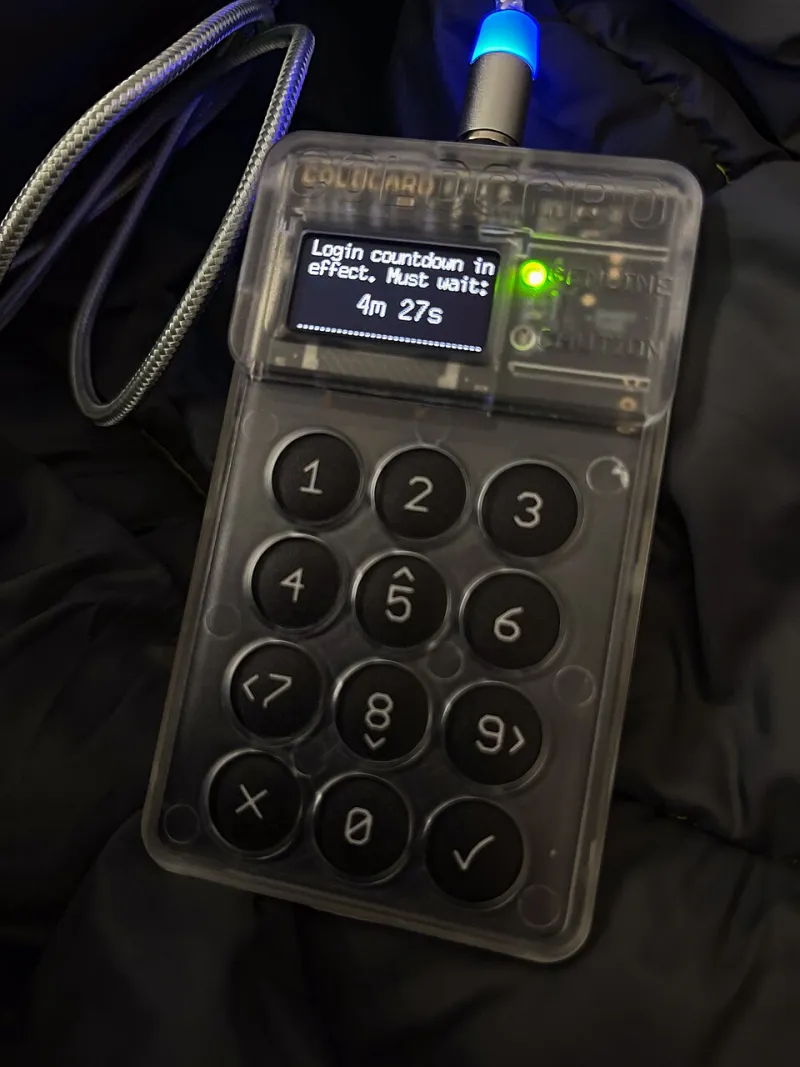
Hardware wallet users should physically locate every device they have ever purchased. Ledger and Trezor both allow users to derive multiple accounts from a single seed phrase, and it is common to have initialized accounts on a device and then stopped using it after setting up a newer model. Each device should be connected and its account list reviewed systematically.
For software wallets, check every browser extension currently installed and every application on your mobile devices. Then check older phones. A device sitting in a drawer may contain a wallet application holding assets that never migrated to your current setup.
On-Chain Verification: Using Block Explorers and Portfolio Aggregators
Once you have compiled a list of addresses — even partial ones — on-chain verification is the next step. Etherscan, Solscan, and their equivalents for other chains allow direct address lookup at no cost. Enter every Ethereum address you can identify and review the full transaction history, including token transfers that may not appear in a standard balance summary.
For investors with extensive multi-chain exposure, portfolio aggregation tools such as Zerion, DeBank, and Zapper can sweep a wallet address across dozens of networks simultaneously, surfacing balances that might otherwise require manual checks on each chain. These tools are imperfect — they do not catch every protocol or every obscure token — but they dramatically accelerate the initial discovery phase.
Pay particular attention to staking positions, liquidity pool deposits, and lending protocol collateral. These holdings do not appear as simple token balances and are frequently overlooked in informal portfolio reviews. An investor who deposited assets into an Aave pool in 2022 and lost track of the wallet may be sitting on a recoverable position that has continued accruing interest.
Reconstructing Tax History From Fragmented Records
The tax dimension of wallet fragmentation deserves serious attention. The IRS treats every taxable crypto event — sale, swap, or use of crypto to purchase goods and services — as a reportable transaction regardless of whether the investor retained documentation. Orphaned wallets that executed trades or participated in DeFi protocols represent potential unreported income or capital gains.
When discovered, these gaps require a decision: reconstruct and amend prior returns, or carry forward with corrected records going forward. The appropriate course depends on the materiality of the unreported amounts and the specific tax years involved. A tax professional with crypto expertise can assess whether voluntary disclosure or amended filing is the more prudent path. What is not advisable is continuing to ignore the exposure as regulatory reporting infrastructure — including mandatory broker reporting requirements taking effect under recent legislation — makes historical omissions increasingly difficult to sustain.
Transaction history exports are available from most major exchanges for accounts that remain accessible. For closed accounts or defunct platforms, blockchain transaction records are permanent and can be reconstructed using the public ledger, though the process is labor-intensive and may require specialized software.
The Inheritance and Recovery Dimension
A portfolio audit serves a second critical function beyond the investor's own financial clarity: it creates a recoverable record for heirs and estate administrators. Crypto held in self-custody is irretrievably lost if the controlling private keys are not documented and securely transmitted to a trusted party. There is no account recovery process, no customer service escalation, and no legal mechanism to compel a blockchain to release funds without the correct credentials.
The audit process should therefore conclude with a secure, updated record of every wallet address, its associated seed phrase or private key storage location, and any relevant exchange login credentials. This record should be stored in a manner accessible to a designated executor or trusted individual — whether through a fireproof physical document, an encrypted digital vault, or a formal letter of instruction held by an estate attorney.
Reclaiming Clarity Before It Is Forced Upon You
The crypto market has matured considerably since the era of casual wallet proliferation. Regulatory expectations have hardened, tax enforcement is intensifying, and the legal complexity of digital asset estates is drawing increasing attention from the courts. The investor who conducts a thorough self-audit today is operating from a position of control. The one who waits for an IRS inquiry or an estate dispute to surface the gaps will be operating from a position of considerable disadvantage.
The holdings are often still there. The addresses are recoverable. The records can be reconstructed. What is required is the methodical effort to do it — before someone else makes the effort on your behalf, at far greater cost.