Broken Bridges: The Structural Failures That Keep Turning Cross-Chain Transfers Into Hacker Paydays
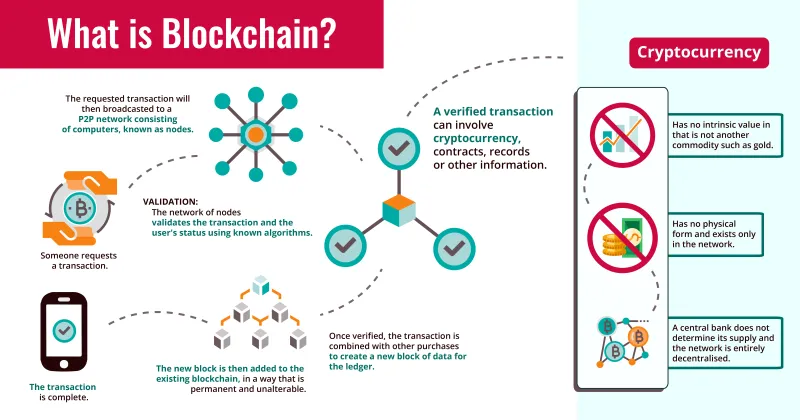
Photo: blockchain network bridge digital infrastructure security technology, via d24cdstip7q8pz.cloudfront.net
The numbers are difficult to dismiss. Since 2021, cross-chain bridge exploits have drained an estimated $2.5 billion or more from protocols that were, in many cases, audited, publicly launched, and actively used by tens of thousands of participants. Ronin Network. Wormhole. Nomad. Harmony Horizon. Each name represents not merely a technical failure but a recurring pattern — one that the blockchain industry has repeatedly acknowledged and repeatedly failed to correct.
For US-based investors navigating a multi-chain ecosystem, the implications extend well beyond abstract security debates. Moving assets between Ethereum, Solana, BNB Chain, or any number of layer-2 networks almost always involves a bridge at some point. Understanding why these systems fail so consistently — and what distinguishes a defensible design from one that amounts to security theater — is now a baseline requirement for responsible participation in digital asset markets.
What a Bridge Actually Does — and Why That Creates Risk
At its core, a cross-chain bridge solves a coordination problem: assets native to one blockchain cannot move directly to another. The most common solution involves locking tokens on the source chain and minting synthetic representations on the destination chain. When a user wants to return to the original chain, the synthetic tokens are burned and the locked assets are released.
This mechanism concentrates enormous value in a single location. A bridge facilitating transfers between Ethereum and another network must hold a reserve of the underlying assets. If that reserve can be accessed by an unauthorized party — through a smart contract vulnerability, a compromised validator set, or a flawed verification mechanism — the attacker effectively drains real value while leaving users holding worthless synthetic tokens.
The architecture creates what security researchers call a honeypot dynamic. The more successful a bridge becomes, the larger its locked reserves grow, and the more attractive it becomes as a target. Unlike an individual wallet, a bridge's attack surface is publicly visible, technically complex, and — critically — often maintained by small teams operating under commercial pressure to ship features rather than harden infrastructure.
The Three Failure Modes That Keep Repeating
Across the major bridge exploits of recent years, three categories of failure emerge with uncomfortable regularity.
Smart contract vulnerabilities remain the most straightforward category. The Wormhole exploit in February 2022, which resulted in approximately $320 million in losses, stemmed from a flaw in the Solana-side smart contract that allowed an attacker to spoof verification of a guardian signature. The code had been audited. The vulnerability existed anyway. Complex smart contract logic operating across heterogeneous virtual machines creates an attack surface that even rigorous auditing cannot fully eliminate.
Validator compromise represents a more insidious category. The Ronin Network breach — still the largest single bridge exploit at roughly $625 million — did not involve a clever contract flaw. It involved the compromise of five out of nine validator keys, giving attackers the multisignature threshold required to authorize fraudulent withdrawals. The nine-validator design was chosen for operational convenience. That convenience cost Axie Infinity's ecosystem its credibility and its users their funds.
Optimistic verification failures constitute a third pattern. Some bridges use optimistic models in which transactions are assumed valid unless challenged within a specified window. Nomad's August 2022 exploit — which saw nearly $190 million drained in a chaotic, crowd-sourced attack — originated from a routine upgrade that accidentally allowed any message to be treated as pre-approved. Once one attacker identified the flaw, dozens of opportunists replicated the transaction with their own addresses. The optimistic model's fraud-proof window became irrelevant because the root of trust had already been corrupted.
Which Designs Are Actually Defensible?
Not every bridge architecture carries equal risk, and the distinctions matter for investors evaluating where to move capital.
Natively verified bridges — those that use the destination chain's own consensus mechanism to verify source-chain state — represent the most rigorous security model. Light client bridges, which relay cryptographic proofs between chains rather than relying on external validators, eliminate the trusted intermediary problem at the cost of significant computational overhead. The Inter-Blockchain Communication protocol used within the Cosmos ecosystem operates on this principle and has maintained a comparatively strong security record.
Third-party validator bridges, by contrast, introduce an external trust assumption. The security of the bridge is only as strong as the validator set, its key management practices, and its resistance to collusion or compromise. These systems are faster and cheaper to deploy, which is precisely why they dominate the market despite their demonstrated vulnerability.
Liquidity network models — in which assets are not locked and minted but instead swapped from existing liquidity pools on each chain — reduce the honeypot problem by distributing rather than concentrating reserves. Protocols like Connext and Hop have pursued this approach with measurable success, though liquidity constraints limit the scale at which the model operates efficiently.
Zero-knowledge proof-based bridges represent the most promising long-term direction. By generating cryptographic proofs of state transitions that can be verified cheaply on the destination chain, ZK bridges approach the security guarantees of natively verified systems without requiring full node infrastructure on both ends. Several projects are actively developing this architecture, though production-grade deployment at scale remains an ongoing challenge.
What US Investors Should Actually Do
For American retail and institutional investors, the practical implications are straightforward even if the technical details are not.
First, treat bridge usage as a distinct risk category in any portfolio framework. Moving assets across chains is not a neutral operational step — it is an exposure event with a nonzero probability of total loss. The size of that probability depends heavily on which bridge is used and how it is designed.
Second, prefer bridges that have operated under adversarial conditions for meaningful periods without incident. Audit reports are necessary but insufficient; real-world resilience over time is a more reliable signal. A bridge that launched six months ago with a glowing audit carries a fundamentally different risk profile than one that has processed billions in volume across multiple market cycles.
Third, avoid concentrating large transfers in a single bridge transaction. Splitting transfers across time and, where feasible, across different bridging paths reduces the impact of any single exploit.
Finally, recognize that the regulatory environment is evolving. The Treasury Department and the Financial Crimes Enforcement Network have both signaled interest in the compliance dimensions of cross-chain infrastructure. Bridges that operate with identifiable counterparties and some degree of regulatory engagement are less likely to face sudden operational disruption than those operating entirely outside any compliance framework.
The Lesson the Industry Keeps Not Learning
The persistence of bridge exploits despite years of documented losses reflects something deeper than technical immaturity. It reflects an economic structure in which the builders of bridges capture upside — in the form of fees, token appreciation, and ecosystem prominence — while users bear the downside risk of catastrophic loss.
Until that incentive structure changes, whether through better insurance mechanisms, more rigorous industry standards, or regulatory requirements for bridge operators, the pattern is likely to continue. The architecture of the multi-chain internet is still being built. For investors who need to navigate it today, understanding which bridges have earned a degree of trust — and which ones are still learning the lesson — is not optional analysis. It is fundamental due diligence.